Meta has officially acquired Assured Robot Intelligence (ARI), a San Diego-based startup building foundation models for humanoid robots, the company confirmed on May 1, 2026. The deal folds ARI’s team—including co-founders Xiaolong Wang and Lerrel Pinto—into Meta’s Superintelligence Labs division. Financial terms were not disclosed.
ARI was developing the AI “brain” that would let humanoid robots handle physical labor: household chores, complex manipulation, environments that require human-level dexterity and adaptability. The startup raised an undisclosed seed round from AI-focused venture firm AIX Ventures before the acquisition.
Who ARI’s Founders Are
The co-founders bring serious credentials. Xiaolong Wang was previously a researcher at Nvidia and an associate professor at UC San Diego, with a track record in robot learning and computer vision. Lerrel Pinto previously taught at NYU and co-founded Fauna Robotics—a startup building kid-size humanoid robots—which Amazon acquired in March 2026. Both founders have multiple prestigious research awards and publications in top AI and robotics conferences.
What makes them valuable is their expertise in getting robots to actually learn from the physical world. Not just planning motions, but adapting to new situations, handling edge cases, and operating alongside humans in unpredictable environments.
Meta’s Long Game in Robotics
This isn’t a sudden move. Meta researchers have been working on humanoid robotics for years. A leaked memo from early 2025 revealed Meta’s ambitions to build both AI models and hardware for consumer humanoid robots aimed at everyday households. The vision described an “Android-style platform”—a common AI brain that could power different humanoid hardware across homes and workplaces, much like how Android powers smartphones from many manufacturers.
ARI brings the missing piece: a team with a track record of building robot intelligence that can understand and adapt to human behavior in complex, dynamic environments. Rather than starting from scratch, Meta acquired proven talent solving exactly the hard problems that have held humanoid robotics back.
The Bigger Picture: Amazon’s Head Start
Meta isn’t alone in this race. Amazon bought Fauna Robotics—the same space as ARI—just weeks before Meta closed its ARI deal. Amazon’s interest in kid-size humanoids signals that major tech companies see household robotics as the next major platform. The difference is that Meta appears focused on the AI layer while Amazon may be building toward integrated hardware-and-software solutions.
Consider the implications: two of the world’s largest tech companies, with massive resources and data access, are now directly competing in humanoid robotics. This is similar to the early smartphone race, where Google and Apple fought for mobile platform dominance. Now the battlefield is your living room.
Why This Matters
The AI industry is diversifying beyond software. For years, AI breakthroughs stayed in the cloud—language models, image generation, recommendation systems. Humanoid robotics represents AI moving into the physical world, where the challenges are fundamentally different: real-time sensor processing, physical dexterity, safety in human environments, and the need to generalize across countless edge cases.
Consumer robotics has long been a “two years away” technology. Humanoid robots have been promising since the 1960s, but practical limitations in AI, actuators, and cost kept them in labs and science fiction. What’s changing now is the convergence of three things: large language models giving robots better reasoning, cheaper and more capable sensors and actuators, and massive investment from companies that can afford to wait for the market to mature.
Foundation models for physical tasks are the next frontier. Just as GPT transformed text tasks, foundation models for robotics could do the same for physical labor. The company that builds the dominant robotics model could have as much influence as OpenAI has had in language AI.
This is a talent and intellectual property race. ARI’s small team had years of research and breakthroughs that Meta is betting will accelerate its robotics roadmap. In AI, people and ideas are often more valuable than products—Meta isn’t just buying what ARI built, they’re buying the researchers who know how to build what’s next.
Competitive Landscape: Who’s Building Humanoid Robots
The list of companies investing in humanoid robotics has grown significantly:
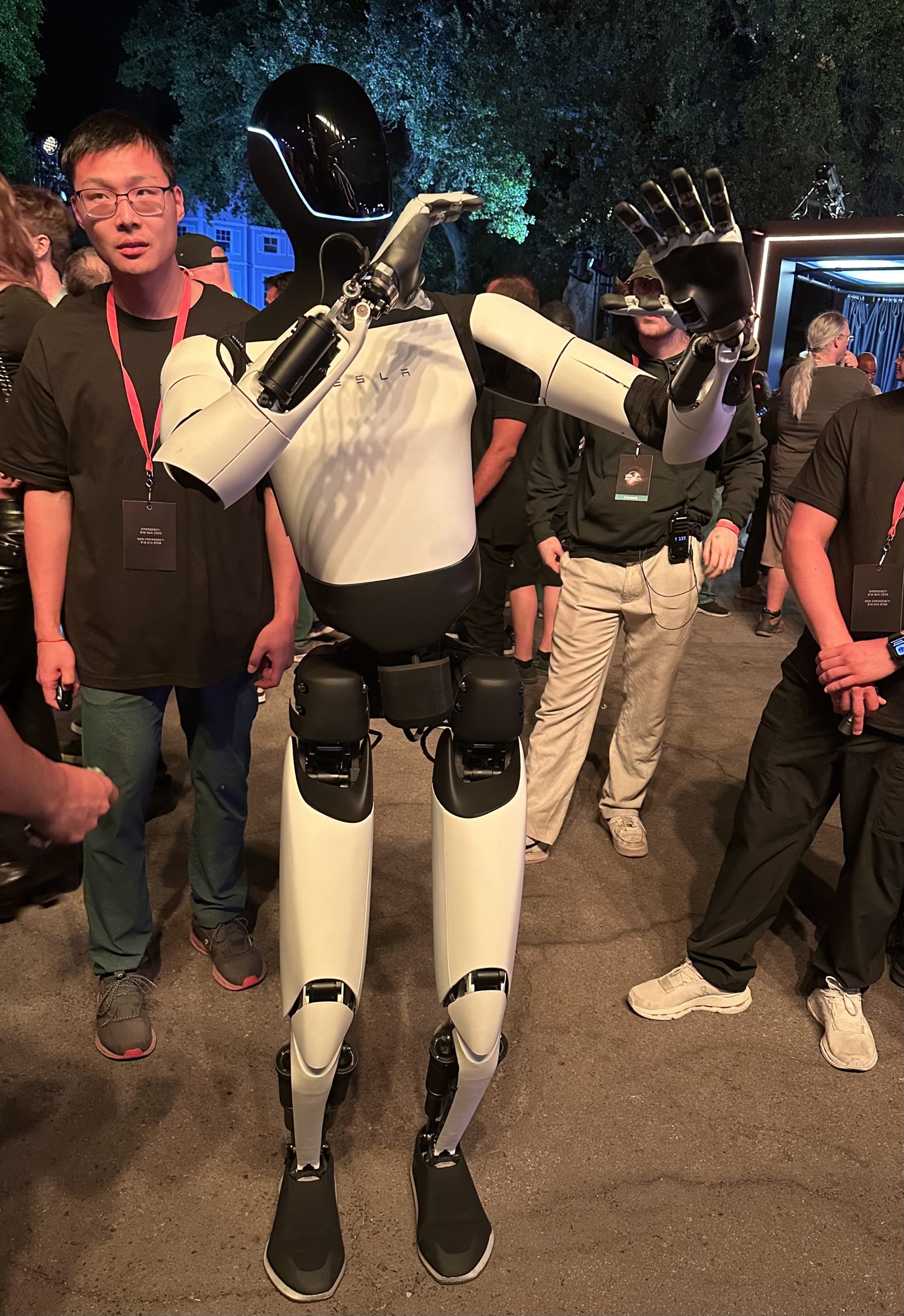
- Tesla — Optimus robot, aiming for consumer and industrial use
- Figure AI — One of the best-funded startups in the space, with partnerships with BMW
- Boston Dynamics — Known for Atlas, now exploring commercial applications
- Agility Robotics — Already deployed Digit robots in warehouses
- Amazon — Acquired Fauna Robotics and exploring warehouse automation
- Apple — Rumored to be exploring home robot prototypes
- Google DeepMind — Research in robot learning and simulation
- Microsoft — Investing in robotics AI through Azure and research
Each brings different strengths. Tesla has manufacturing scale. Boston Dynamics has decades of robotics engineering. Meta has data centers and AI expertise. The race is on to see who can crack the combination of AI intelligence and physical reliability that consumer humanoid robots require.
Key Takeaways
- Foundation models for robots — ARI was building the AI software stack that lets humanoid robots learn physical tasks, not the hardware itself
- Star team — Xiaolong Wang (ex-Nvidia, UC San Diego) and Lerrel Pinto (ex-NYU, co-founded Fauna Robotics which Amazon bought in March 2026) now work for Meta
- Superintelligence Labs — This is the same division driving Meta’s most ambitious AI research, signaling robotics is core to Meta’s AI strategy
- Race is on — Amazon and Meta are both investing heavily in humanoid robotics; expect more acquisitions and announcements
- Platform potential — Whoever builds the dominant humanoid AI model could define the next major computing platform, similar to how iOS and Android defined mobile
The Bottom Line
Meta’s acquisition of ARI is more than a robotics deal. It’s a signal that the next phase of AI expansion is physical—that tech giants see humanoid robots as the logical extension of AI from screens and speakers into the real world. Whether Meta wins or Amazon or someone else entirely, the investment flowing into this space means the dream of useful household robots is closer than ever to becoming reality.
The question isn’t whether humanoid robots will happen. It’s who will build the brain that powers them.
—
Published: May 10, 2026

Leave a Reply